
Live Captions for Churches: A Simple Guide to Inclusive Worship
Live captions show spoken words as text on a screen, right as they are said.
In churches, live captions help more people join in worship, learn, and feel welcome.
Key Takeaways
- Live captions make speech visible in real time.
- They support church accessibility for Deaf and hard of hearing people.
- They also help anyone who understands better by reading.
- Good captions are clear, timely, and easy to see.
What Are Live Captions
Live captions are text that appears while a person is speaking.
The goal is simple: people can read what is being said right away.
Some people call them real-time captions or live captions. They mean the same thing.
Why Live Captions Matter in Church
Church is a place of welcome. People come to connect, learn, and worship together.
When spoken words are only heard, some people are left out.
Live captions help people follow the message in the same moment as everyone else.
This supports church accessibility and shows care for the whole community.
Who Benefits from Live Captions
Live captions help more people than many leaders expect.
They are important for people who are Deaf or hard of hearing.
They also support people who speak another language or process words better when they read.
- People who are Deaf or hard of hearing
- Older adults with hearing loss
- People learning English
- Children who read along to stay focused
- Anyone sitting far from the speakers
Live Captions and Church Accessibility
Church accessibility means removing barriers so everyone can participate.
Live captions are a clear and kind step toward that goal.
They tell people, “You belong here.”
Small changes can make a big difference in how welcome people feel.
How Live Captions Work
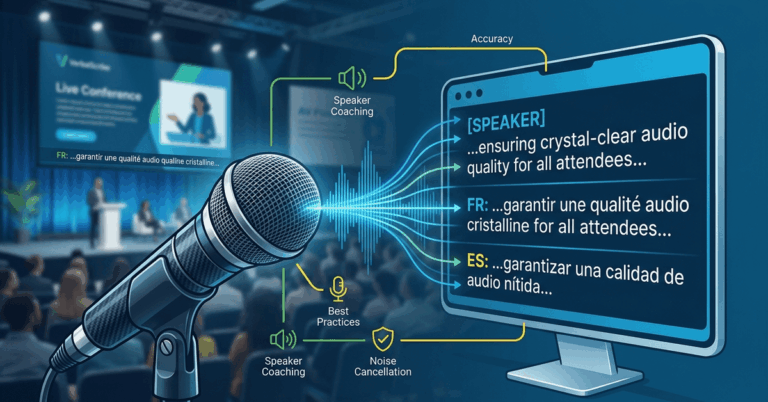
During a service, speech is captured and turned into text.
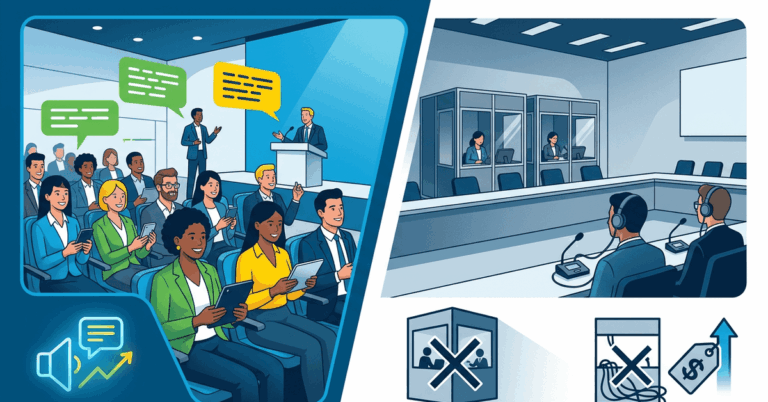
The text is shown on a screen, a tablet, or a phone.
Some churches display captions on a main screen. Others share them on personal devices.
The best choice depends on the room, the audience, and the service style.
Live Captions vs. Recorded Captions
Recorded captions are added after a video is made.
Live captions happen at the same time as the speech.
For worship and live events, live captions keep everyone in the moment.
What About Live Translation for Church
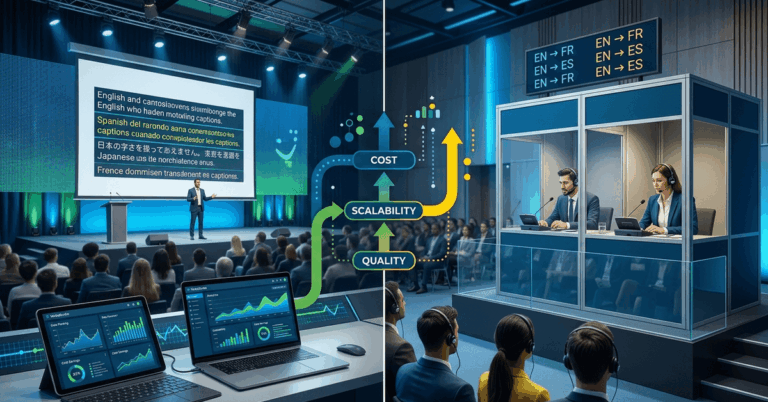
Live translation turns spoken words into another language as they are said.
Some churches use live translation for church services with mixed languages.
This can be paired with live captions to help more people understand and belong.
When both are used well, people can follow the message without delay.
What Good Live Captions Look Like
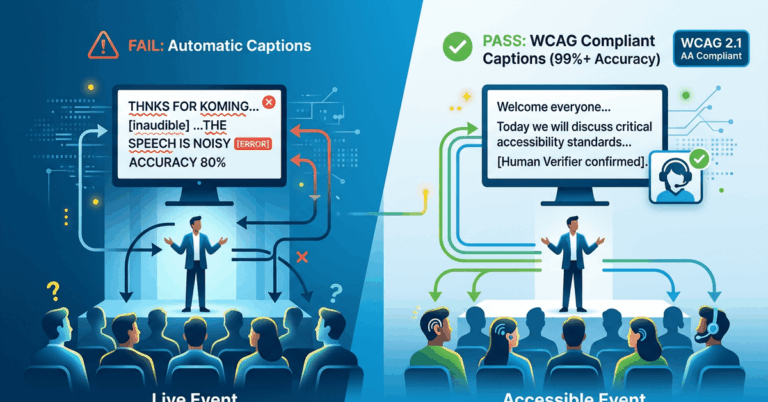
Good captions are easy to read and close to the timing of the speaker.
They use simple spelling and clear punctuation.
They avoid long lines of text and crowded screens.
When captions are well done, people can read without stress.
Common Places to Show Captions
There is no single right place to show captions.
Many churches choose one or more of these options.
- A side screen near the stage
- A lower screen below the main screen
- Personal phones or tablets
- A back wall screen for larger rooms
Preparing Your Team
It helps to tell the team why live captions matter.
Explain that captions are part of the church’s care for people.
Plan how to handle names, Bible references, and special words.
This keeps captions accurate and clear during the service.
Tips for Better Captions
Small steps can improve the experience.
- Keep microphones close to speakers
- Reduce background noise where possible
- Use clear, steady speaking
- Share special words or names ahead of time
- Test the display before the service starts
What to Expect When You Start
It is normal to learn as you go.
The first few services may feel new.
Over time, the process becomes smooth and familiar.
Many churches find that captions quickly become a valued part of worship.
Addressing Common Concerns
Some leaders worry captions will distract people.
In practice, most people focus on the message as before.
Those who need captions are grateful to have them.
With thoughtful placement, captions support everyone without taking over the room.
Inclusion First
Inclusion means everyone can take part in the moment.
Live captions for churches support that goal with care and respect.
When people can read what is said, they can worship, learn, and respond together.
That shared experience helps the whole community grow closer.
Frequently Used Terms, Simply Explained
Some terms are common in church accessibility work. Here are simple meanings.
- Live captions: Words shown on screen as speech happens.
- Real-time captions: Another name for live captions.
- Live translation for church: Spoken words shown in another language as they happen.
- Accessibility: Making a space usable and welcoming for all.
A Simple Summary
Live captions for churches help people follow worship and teaching in real time.
They support church accessibility, build inclusion, and welcome more people.
With clear planning and care, captions become a natural part of the service.